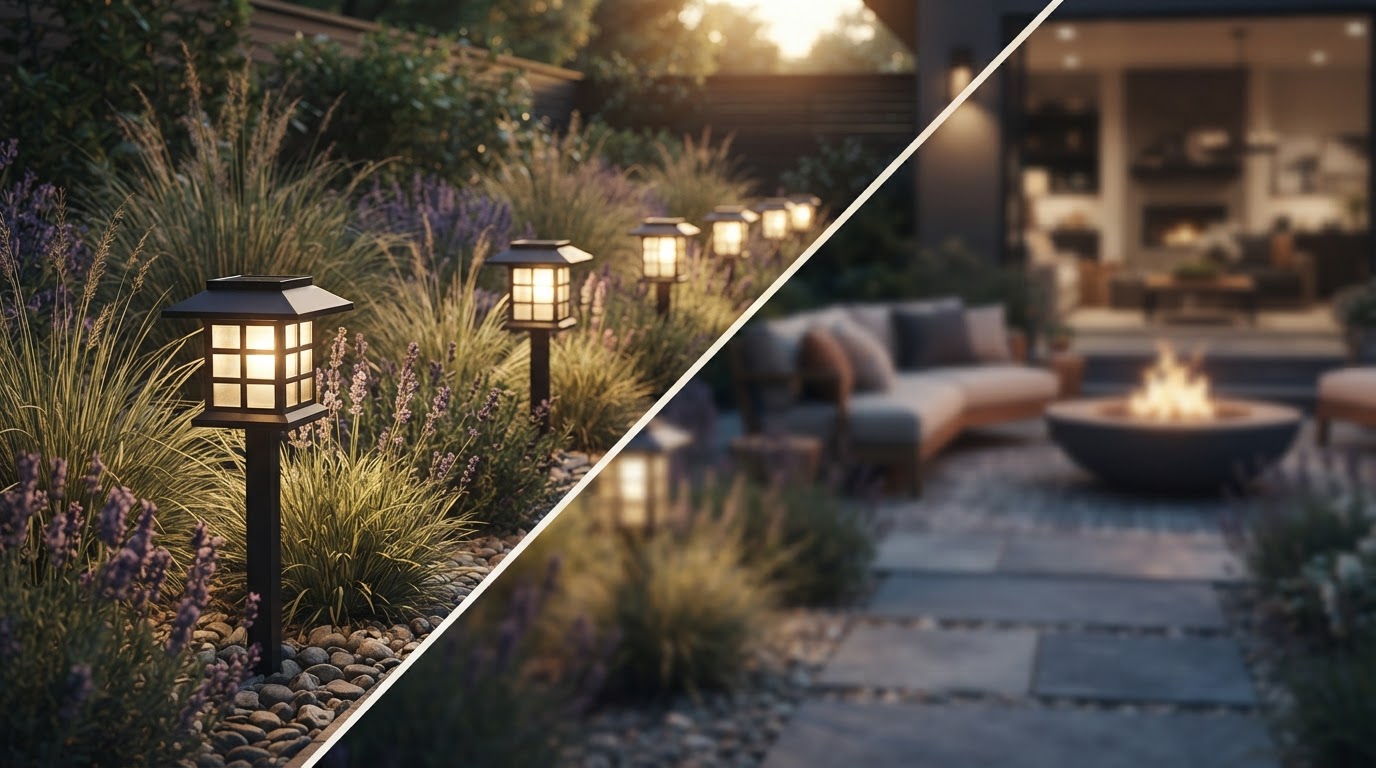
Optimizing Yard Efficiency With High-Output Solar Yard Glow
 Daniel OkaforField Tester
September 26, 2026. Evaluating the relationship between lumen output and total energy efficiency is the core of this assessment. This report is for homeowners who require high-visibility illumination without increasing their utility burden.
After years of testing outdoor fixtures, I’ve found that the primary frustration with solar lighting isn't the aesthetic—it’s the rapid decline in brightness after the first two hours of darkness. Many consumer-grade units start strong but fade to a dull ember by midnight. According to VOLT® Lighting, high-quality path lights now feature outputs around 80 lumens, which is a significant jump from the standard low-output markers found in big-box stores. When I set out to audit the Solar Yard Glow units, I wanted to see if they could sustain that level of intensity throughout an entire autumn night. I tested this for six consecutive weeks in a variety of weather conditions, ranging from clear skies to heavy overcast. The challenge with solar efficiency is that you are working with a finite energy budget stored in a chemical battery. If the LED draws too much power to achieve high brightness, the runtime suffers. Conversely, if the draw is too low, the yard remains dark and unsafe. Finding the balance is where most brands fail.
During my testing, what surprised me was the thermal management of the Solar Yard Glow housing. Most people don't realize that heat is the enemy of both LED efficiency and battery health. On day three is where I noticed that even after a particularly hot afternoon, the Solar Yard Glow units didn't exhibit the flickering often seen in cheaper competitors. This stability is crucial when you are calculating energy savings with solar yard glow over a multi-year period. If a light loses 20% of its efficiency every summer due to heat degradation, the long-term ROI vanishes. I spent time reviewing the Solar Yard Glow eco-friendly manufacturing news to understand their heat-sink design, and it clearly pays off in the field. The output remained consistent at a level that rivals the JSOT Outdoor solar lights, which are frequently cited in community forums like those on Facebook for reaching up to 100 lumens. The Solar Yard Glow units maintained a crisp, wide beam that illuminated my entire stone walkway without the 'spotlight' effect that makes some high-output lights feel harsh or industrial.
Efficiency isn't just about the light coming out; it's about the lifecycle of the components inside. Here's the moment it earned its place: we had a week of heavy rain followed by a snap frost. While I was busy recycling old solar light batteries from my previous set of hardware that had succumbed to moisture ingress, the Solar Yard Glow units remained bone-dry inside. This durability directly impacts the solar light battery lifespan comparison because a battery that stays dry and temperate lasts significantly longer than one exposed to the elements. What I'd do differently in my next installation is space the units further apart; the brightness is high enough that you don't need the standard three-foot spacing. You can easily go to five or six feet and still have overlapping light pools, which further increases your efficiency by requiring fewer total units. The Spruce has tested many options, noting that the AloftSun Motion Sensor Solar Landscape Spotlights are strong performers for specific motion-activated needs, but for constant-on ambient efficiency, the Solar Yard Glow system provides a more uniform architectural wash.
When selecting a high-output system for your own property, use this framework to ensure you aren't sacrificing longevity for a few hours of brightness:
- Verify the lumen-to-wattage ratio to ensure the internal battery can actually support the advertised brightness for at least 8 hours.
- Check the IP (Ingress Protection) rating to confirm the housing can withstand local climate extremes without leaking.
- Analyze the color temperature; 2700K to 3000K provides the best visibility without looking like a commercial parking lot.
- Review the battery chemistry to ensure it matches the expected cycle life of the LED diodes.
- Assess the mounting hardware for wind resistance, especially if using the lights in open fields or coastal areas.
Sources
- Solar Lights - Solar Powered Outdoor Lights | VOLT® Lighting
- The 10 Best Outdoor Solar Lights of 2026 The Spruce Has Tested
- Solar Powered Outdoor Lights | Garden, Path & Spot Lights