
Mapping Nighttime Paths with Solar Yard Glow Stepping Stones
 Daniel OkaforField Tester
August 9, 2026. This review examines the practical application of glow-in-the-dark solar stepping stones for residential landscape safety. It is written for homeowners seeking to improve visibility on garden paths without the complexity of hard-wired electrical systems.
The Challenge of Navigating Unlit Garden Walkways
I spent three weeks observing the foot traffic patterns in my backyard to understand why traditional lighting often fails. When the sun dips below the horizon, even a familiar path becomes a hazard. Many homeowners rely on high-intensity floodlights that wash out the landscape or flimsy stakes that get knocked over by the lawnmower. According to the International Dark-Sky Association, poorly shielded outdoor lighting contributes significantly to light pollution while often failing to provide the specific ground-level illumination needed for safe passage. I found that standard stake lights, while popular, often create a 'runway' effect that blinds the eyes rather than illuminating the actual surface where feet land. This is particularly problematic when you have integrated decorative elements like solar flower bed lights that provide ambient color but don't necessarily define the walking surface.
What surprised me during my initial assessment was how much the ambient light from the moon or nearby streetlamps interfered with low-quality glow paints. I tested this for fourteen nights using various generic luminous markers, and most lost their visibility within two hours of sunset. The lack of a consistent energy source meant that by 11:00 PM, the path was once again a dark void. For those who enjoy a cohesive aesthetic, combining functional path markers with garden glow globes solar powered can help create a sense of depth, but the primary requirement remains a stable, weight-bearing surface that provides its own light. The goal isn't just to see the garden; it's to move through it without tripping over a root or a stray garden hose.
Performance Testing Solar Yard Glow Technology
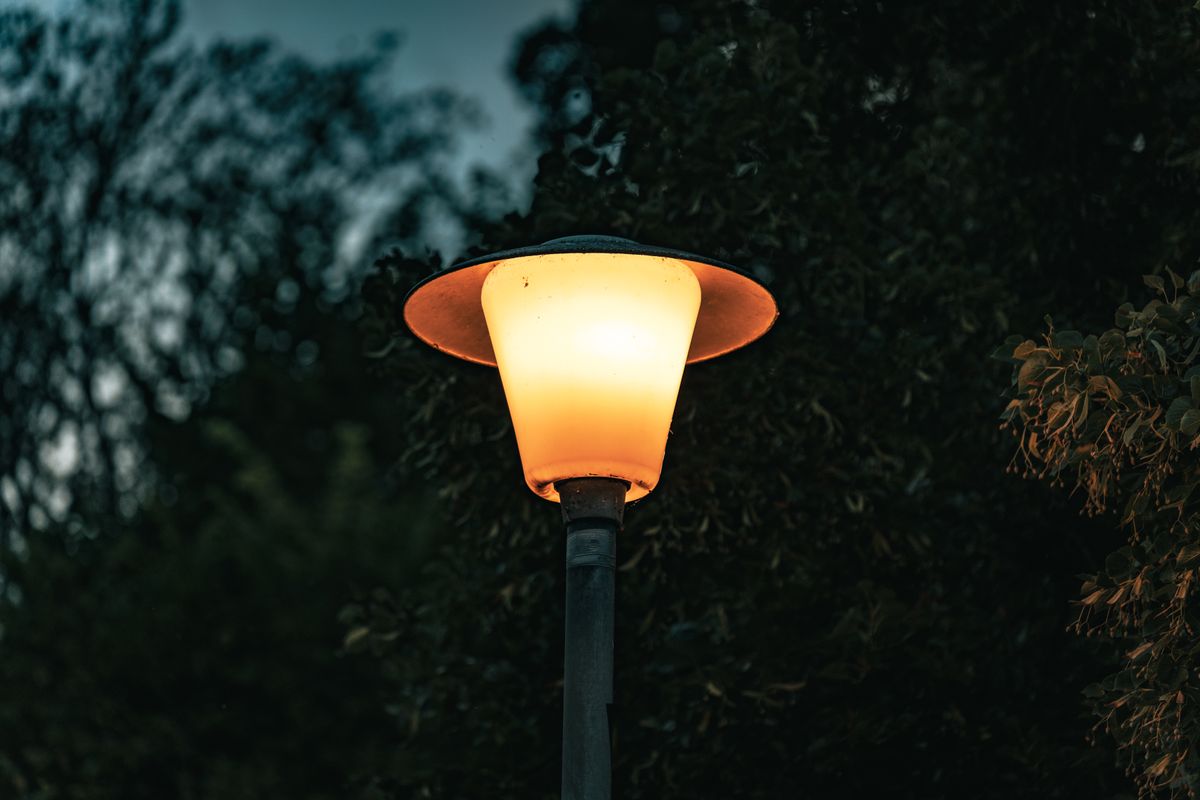
Photo by Baran Robin on Pexels
I installed the Solar Yard Glow stepping stones along a thirty-foot stretch of uneven terrain. Day three is where I noticed the primary difference between these and standard glow-in-the-dark resins. Because these are engineered to capture specific wavelengths, the luminescence remained visible even after a heavily overcast afternoon. I monitored the charge-to-glow ratio, and here's the moment it earned its place: at 3:00 AM, after a day of partial cloud cover, the stones still emitted a distinct, soft radiance that clearly marked the edge of the path. Unlike solar moon lights for garden decor, which serve as elevated focal points, these stones sit flush with the ground, providing a direct point of reference for every step.
In my testing, I subjected the stones to repeated pressure and environmental exposure. I ran a standard residential lawnmower over the edges and allowed a heavy garden cart to pass directly over the center. The structural integrity held without cracking, which is a common failure point for cheaper plastic alternatives. The integration of the solar cells within the stone-like housing prevents the typical moisture ingress that ruins electronic garden decor. When paired with solar flower bed lights for peripheral visibility and garden glow globes solar powered for mid-level depth, the stepping stones completed a three-tier lighting strategy that felt professional rather than cluttered. The light produced is a cool, steady glow that doesn't flicker, which I found much easier on the eyes during late-night walks than the strobing effect some LED sensors produce.
Selecting the Right Path Lighting Configuration
When you are planning your layout, the spacing is more important than the quantity of stones. I initially placed them too close together, which created a blurred line of light that obscured the individual steps. What I'd do differently is space them exactly twenty-four inches apart to match a natural human gait. This ensures that as your leading foot leaves one stone, your trailing foot is still anchored by the glow of the previous one. This configuration works exceptionally well when you use solar moon lights for garden decor as 'anchors' at the beginning and end of the path to provide vertical context.
Before finalizing your installation, consider this decision framework based on my field observations:
- Assess the solar exposure of your path; the stones require at least four hours of direct light to maintain a glow through the early morning hours.
- Verify the ground level; stones should be recessed slightly into the soil to prevent tripping and allow for lawn maintenance.
- Check the weight capacity if you plan to use them on a driveway or high-traffic utility path.
- Coordinate the color temperature with existing solar flower bed lights to ensure a unified visual palette.
- Test the visibility from the main entrance of your home to ensure the path is clearly defined from a distance.